
Serengeti Accommodation
How to Choose a Serengeti Camp by Location and Season
A Serengeti camp should be chosen around location, season and route—not only photos or brand name. Use this framework to narrow the right area.
Choosing a Serengeti camp is partly an accommodation decision and partly a geography decision. Two camps with similar comfort can create very different daily experiences if they sit in different parts of the ecosystem.
Start with the route, not the room
Ask where you will enter the Serengeti, what area you want to explore, how many nights you have and where you go next. A camp that is perfect for a longer stay can be inefficient for a short itinerary if it requires a large detour from the rest of the route.
Central Serengeti is often useful because it connects many directions and supports broad wildlife viewing. Northern, western and southern areas can become more important at different times or for more specific priorities.
Understand seasonal movement without treating it as a guarantee
Wildlife patterns shift with rainfall, grazing and other natural conditions. Migration-focused travel therefore needs flexible expectations. Rather than choosing a camp because a marketing page promises a spectacle, choose an area that historically fits the season and still offers a worthwhile safari if nature behaves differently.
Permanent lodge or seasonal tented camp
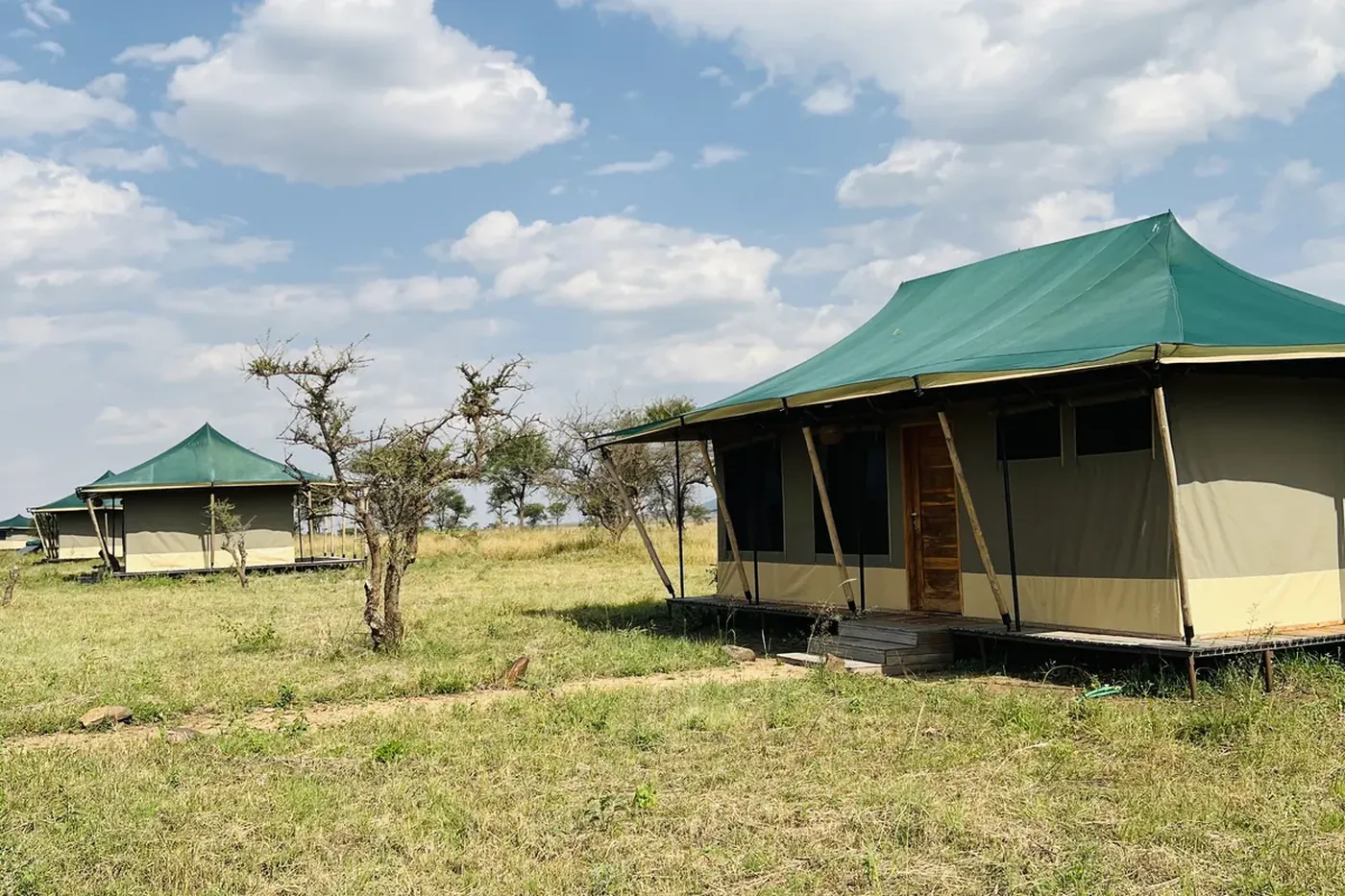
A permanent lodge may offer a more established physical setup, while a tented camp can create a closer sense of place and sometimes operate in locations designed around seasonal access. Neither is automatically better. Consider bathroom style, electricity pattern, room insulation, dining setup, family configuration and how much time you expect to spend at camp.
Airstrip and road access
Fly-in travelers should ask which airstrip serves the property and how long the transfer normally takes. Driving itineraries need to consider the camp's position relative to the day's game-drive area and the following destination. A scenic remote location can be excellent, but the transfer needs to fit the available daylight and pace of the trip.
Two or three nights can feel very different depending on location
If you have only two nights, a central and flexible base may protect more game-drive time. With more nights, splitting areas can make sense when it reduces repeated driving and supports a specific seasonal plan.
Compare the total stay, not just the nightly rate
Ask what the quoted rate includes: meals, drinks, transfers, concession or activity fees, laundry, child policies and any single-room supplement. A lower headline rate can become less attractive once the full logistics are added.
SafariTeller can help use dates and route direction to narrow the Serengeti area first, then compare accommodation styles inside that area.